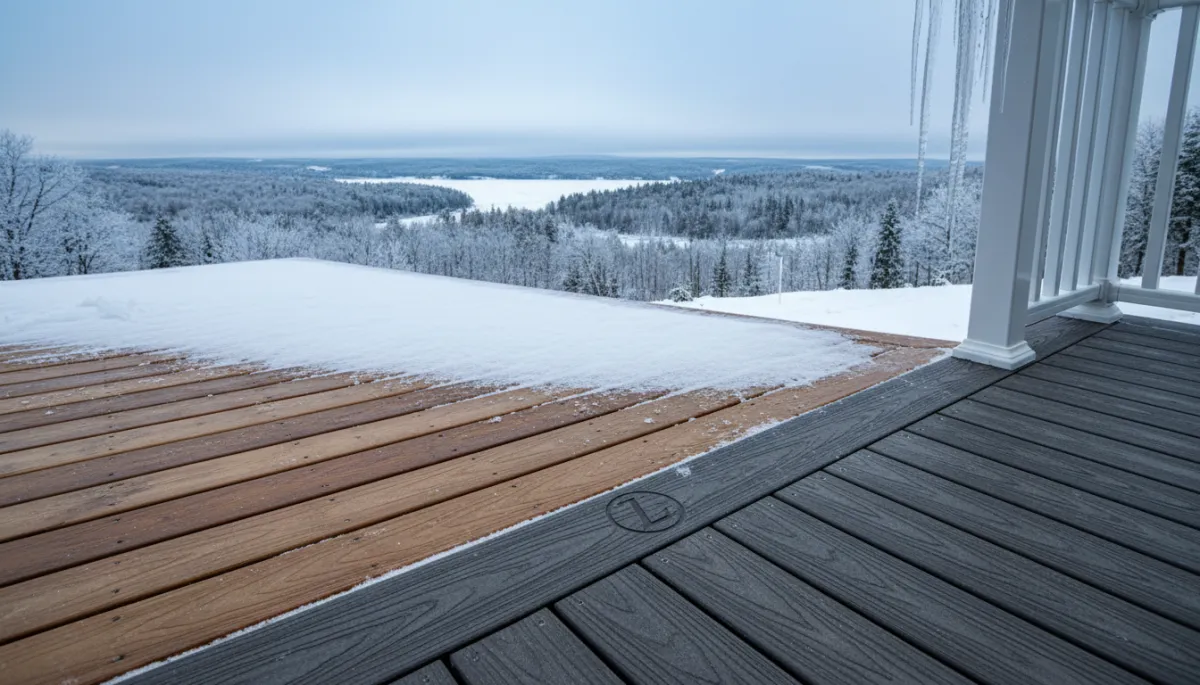
Best Deck Materials for NY Winters
Deck Materials, Western New York Winters, Deck Builder Jamestown
What Deck Material Holds Up Best Against Western New York Winters?
For Western New York winters, the deck materials that hold up best are high-quality composite decking and PVC decking, with properly maintained pressure-treated wood and cedar decking as close contenders for homeowners who prefer a natural wood look. Around Jamestown and Chautauqua County, where snow loads, lake-effect moisture, and freeze–thaw cycles are a fact of life, choosing the right surface is the difference between a deck that still looks great in 15 years and one that’s cupped, cracked, and unsafe in five. As a local deck builder in Jamestown, NY, Lewis Contracting has seen how each material really performs through our long, wet winters and short, humid summers.
Which deck materials consistently perform best in Western New York winters?
Industry research and what we see on local job sites line up: composite and PVC decking are the top performers in cold, wet climates like ours. They resist moisture intrusion, don’t rot, and handle repeated freezing and thawing better than most traditional lumber options.1,2 That said, many Chautauqua County homeowners still choose pressure-treated wood or cedar decking for budget or aesthetics, and those can work well if you understand the trade-offs and commit to maintenance.
How does pressure-treated wood decking hold up in Jamestown’s snow and ice?
What are the pros of pressure-treated wood in Western New York?
Pressure-treated wood is the workhorse of decks across Western New York. It’s treated with preservatives to resist rot and insects, and it’s usually the most budget-friendly option up front. For homeowners near Jamestown, Lakewood, or Falconer looking to maximize square footage for the dollar, pressure-treated lumber can make a large deck or multi-level layout more attainable. It also offers a classic wood grain that stains well in natural tones that complement older Jamestown homes and lake cottages alike.
Where does pressure-treated wood struggle in Western New York winters?
The downside is winter moisture. Even treated lumber still absorbs water. When boards get soaked with slush in January and then temperatures plunge overnight, that trapped moisture expands and contracts. Over several seasons, we see more:
Cupping and warping, especially on wide deck boards
Surface checking and cracking that can lead to splinters
Premature staining, graying, and mildew in shaded or lakeside locations
To keep pressure-treated decks performing in our climate, plan on cleaning and sealing every 1–2 years. Skipping that maintenance is where we see Western New York decks go downhill fast.
Is composite decking really worth it for Western New York winters?
Why does composite decking excel in cold, wet climates?
Composite decking is made from a blend of wood fibers and plastic. That combination creates a board that’s far more stable through freeze–thaw cycles than standard lumber. Research on cold-climate decks shows composite is highly resistant to moisture, won’t rot, and is less likely to warp or crack under snow loads and temperature swings.1,3 In practical terms, that means your deck in Jamestown or Bemus Point will look closer to “like new” after a decade of winters than an unprotected wood deck built at the same time.
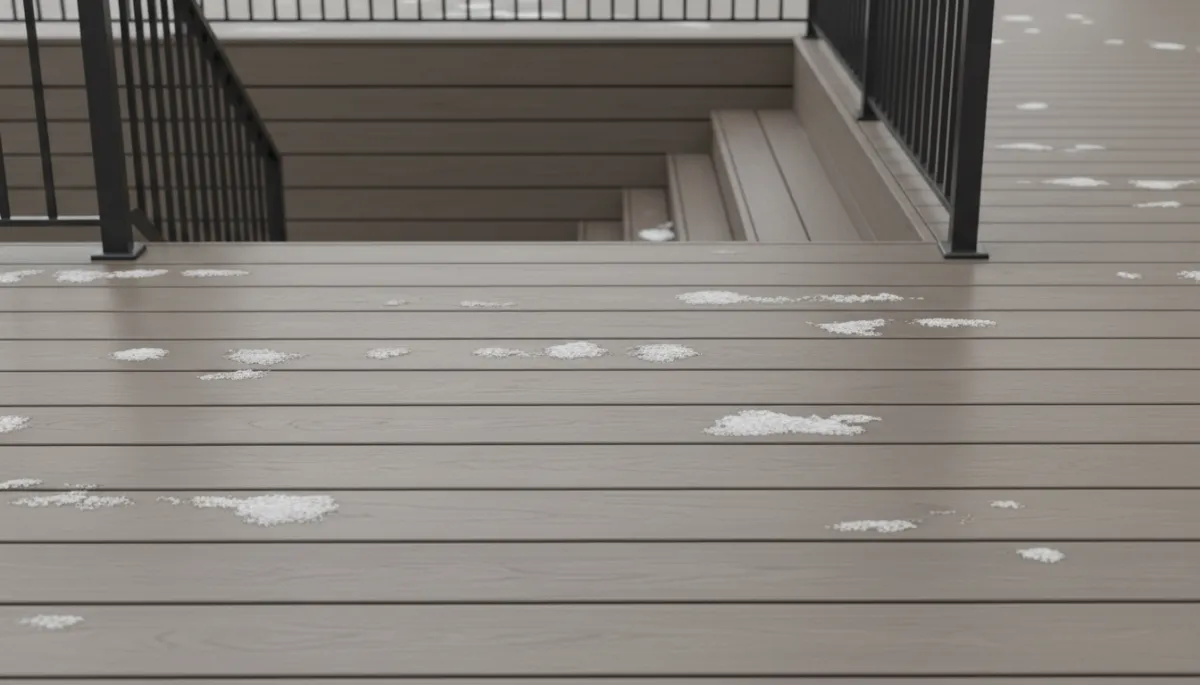
Close-up of composite decking boards with light snow melting on surface, gray-brown tones,...
Quality composite decking resists moisture, warping, and winter wear far better than basic lumber.
What are the trade-offs of composite decking here in Chautauqua County?
The main consideration is cost: composite decking is more expensive upfront than pressure-treated wood. However, it requires far less maintenance—no staining, sealing, or sanding—just periodic washing. Over 10–15 winters, many homeowners find the life-cycle cost comparable or even lower. Another factor is traction. Some older composite products can be slick when icy, so we recommend modern lines designed with textured, slip-resistant surfaces specifically rated for cold-weather climates.
How does PVC decking compare for Western New York’s harshest winters?
Why is PVC decking a top performer against snow and moisture?
PVC decking is 100% synthetic—no organic wood fibers—so it does not absorb water. That makes it extremely resistant to rot, mold, and the expansion and contraction that tear up traditional boards in Western New York winters.3 For homes close to Chautauqua Lake or in shaded, damp backyards, PVC is one of the most durable choices you can make. It also offers excellent stain and fade resistance, which matters when your deck sees everything from road salt to wet leaves and lake spray.
Are there downsides to PVC decking for Jamestown-area homes?
PVC is typically at the higher end of the price spectrum. Some homeowners also feel it looks slightly less like natural wood than composite or cedar, though newer products have much more realistic grain patterns and color variation. As with composite, choosing a PVC line with good traction is critical for icy mornings. Installed correctly by an experienced crew, PVC can be a “shovel it and forget it” surface that shrugs off decades of Western New York winters.
Does cedar decking make sense in our Western New York climate?
What are the benefits of cedar decking for Chautauqua County homes?
Cedar decking appeals to homeowners who love a warm, natural wood look but want better natural resistance to decay than standard pine. Cedar contains oils that help resist insects and rot, and it’s lighter and more dimensionally stable than many pressure-treated options. On historic Jamestown homes or lake cottages, cedar can complement existing trim and siding beautifully.
How does cedar handle Western New York winters over time?
Cedar still needs protection in our climate. Unfinished cedar will weather to a silvery gray, and repeated freeze–thaw cycles can cause surface checking. To keep it performing, plan on regular cleaning and high-quality stain or clear sealer every couple of years. If you’re drawn to cedar decking, budget for that maintenance and consider composite or PVC railings to reduce upkeep on the most exposed components.
How do deck materials and services vary across the Jamestown and Chautauqua Lake area?
In town, where snow gets piled from driveways and roofs directly onto decks, we often recommend composite or PVC to minimize winter damage and maintenance. Around the lake, where decks see constant moisture and wind, those same low-maintenance products typically outlast basic lumber by many years. No matter where you are in Chautauqua County, Lewis Contracting can pair the right material with expert framing, footings, and general contracting services so your deck structure is as tough as the surface. If you’re searching for a trusted deck contractor near Chautauqua Lake, local experience with Western New York winters should be at the top of your checklist.
Frequently asked questions about deck materials and Western New York winters
Will snow and ice ruin my deck if I don’t shovel every storm?
Occasional snow buildup won’t ruin a properly built deck, but letting heavy, wet snow sit all winter is hard on any material. Composite and PVC handle it best, but even they benefit from regular clearing. Use a plastic shovel, push with the board direction, and avoid metal blades that can gouge surfaces—especially on wood and softer capped composites.
Can I use salt or ice melt products on my deck in Jamestown?
It depends on the material and manufacturer. Many composite and PVC brands allow certain calcium chloride products, but rock salt can damage coatings and fasteners over time. On pressure-treated or cedar decking, salt can accelerate corrosion and staining. We recommend sand for traction and checking your decking manufacturer’s winter care guidelines before using any de-icer.
What’s the best all-around deck material choice for most Western New York homeowners?
For most Jamestown-area families who want low maintenance and long-term durability, a quality composite or PVC deck is the best fit. If you love real wood and don’t mind regular upkeep, pressure-treated or cedar can still be excellent choices when built and maintained correctly. The right answer comes from balancing budget, appearance, and how much time you want to spend maintaining your deck each year.
Ready to build a deck that can handle Western New York winters?
If you’re planning a new deck or replacing a tired, weather-beaten one anywhere in Jamestown or around Chautauqua Lake, Lewis Contracting can help you choose the best deck materials for our Western New York winters and your budget. We’ll walk you through pressure-treated wood, composite decking, PVC, and cedar decking options, then design a structure that’s built to last. Contact us today to get a free deck quote and start planning a deck you’ll enjoy in every season.

