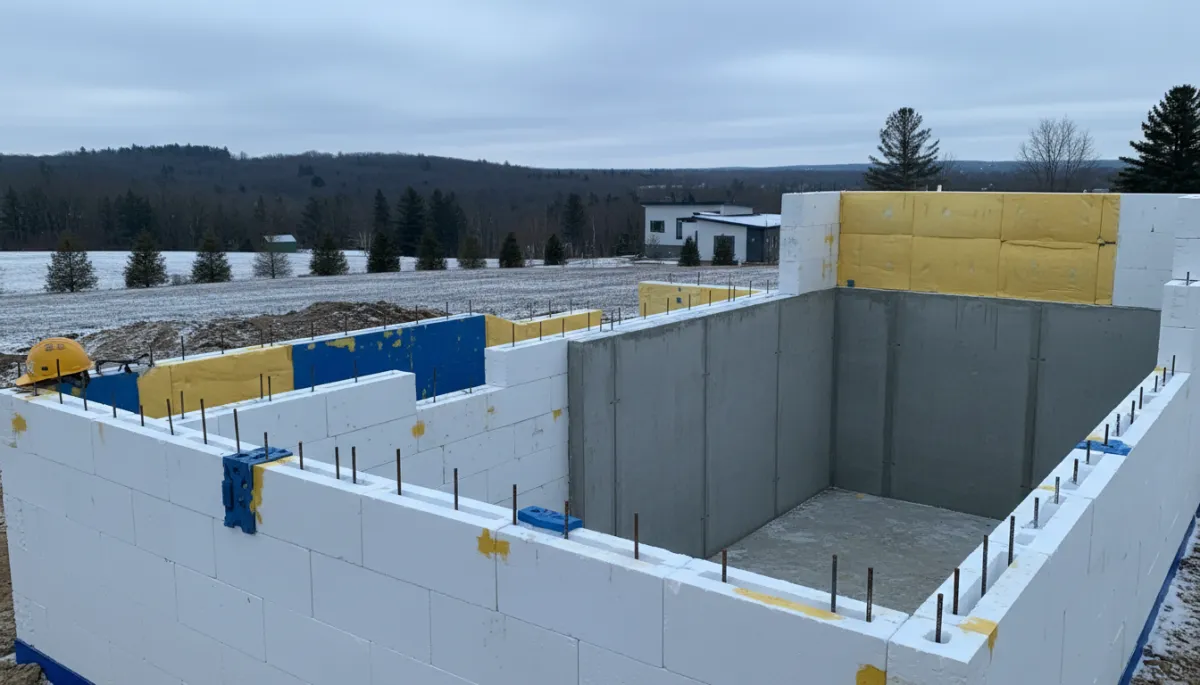
ICF Foundations: Smart Choice for NY Homes
Home Construction, ICF Foundation, Jamestown NY, Energy Efficiency, Foundation Types, ICF Benefits
What Is an ICF Foundation and Why Is It a Smart Choice for Western NY Homes?
An insulated concrete form (ICF) foundation is a concrete foundation poured inside hollow foam blocks that stay in place permanently to provide built‑in insulation and strength. For homeowners in Jamestown NY and across Western New York, this matters because it directly affects comfort, energy efficiency, and how well your home stands up to our harsh winters and freeze–thaw cycles. Instead of relying on bare concrete walls that can feel cold and damp, an ICF Foundation creates a warm, dry, and durable shell under your home that works year‑round to reduce heat loss and help control moisture.
If you are planning a new build or a major addition and comparing foundation types, it is worth understanding why more well‑informed homeowners are asking for ICF. Working with an experienced ICF foundation contractor in Jamestown can help you design a foundation that supports your long‑term goals for comfort, performance, and resale value, not just getting the project out of the ground.
What is ICF, and how does an ICF foundation work?
Insulated concrete forms are interlocking blocks or panels made of rigid foam. They stack together like large, lightweight building blocks to create the shape of your foundation walls. Steel reinforcing bars are placed inside, and then concrete is poured into the hollow center. Once the concrete cures, you end up with a solid, steel‑reinforced concrete core sandwiched between two continuous layers of insulation. Unlike traditional removable forms, the foam stays in place permanently and becomes part of the wall system, providing thermal insulation and a base for interior and exterior finishes.
How is an ICF foundation actually built on site?
The construction process for an ICF Foundation is carefully planned but straightforward. After excavation and footing work, crews begin stacking ICF blocks along the footing line to create the basement or crawlspace walls. The forms are braced and aligned to ensure straight, plumb walls. Steel rebar is added inside the cavity according to engineering requirements for your soil conditions and wall height. Once everything is secured, concrete is placed in lifts, filling the forms from the bottom up. As the concrete cures, it bonds with the rebar and the foam, creating a strong, monolithic wall. Openings for windows, doors, and utilities are built into the formwork so that the finished foundation is ready for framing, waterproofing, and backfilling with minimal extra steps.
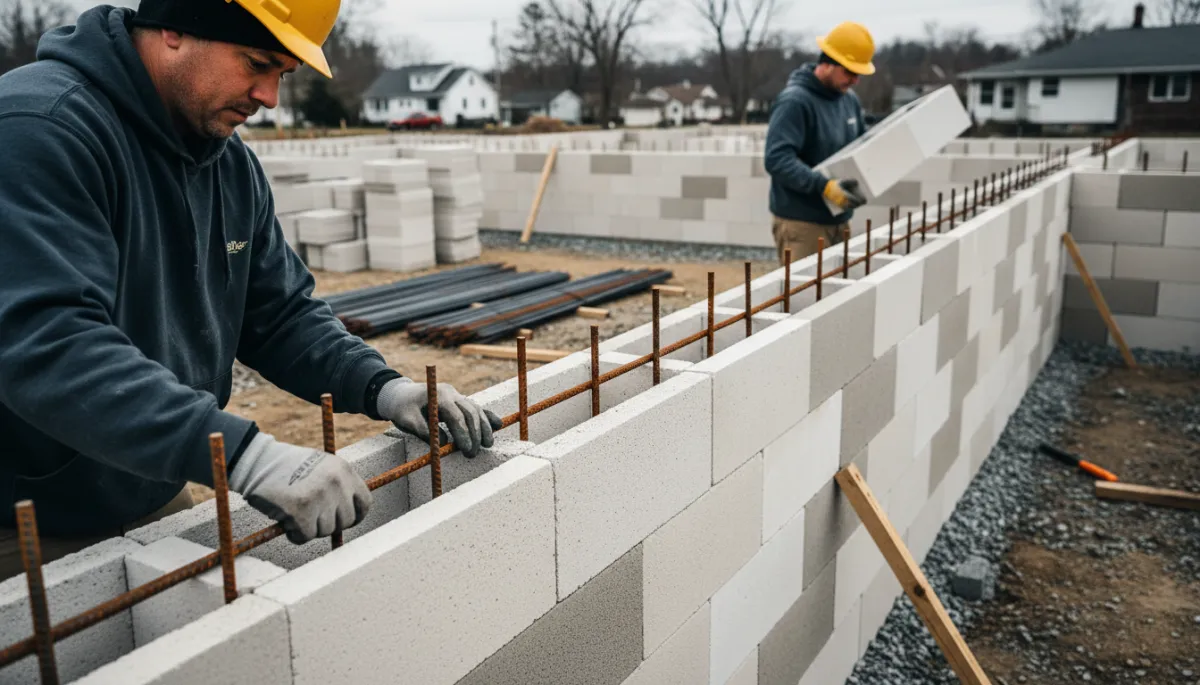
Properly stacked ICF blocks and rebar create a reinforced, insulated foundation wall system.
Why is an ICF foundation better suited to the Western NY climate?
Western New York’s climate is demanding on homes. We see lake‑effect snow, long stretches of freezing temperatures, and frequent freeze–thaw cycles that can stress traditional concrete and masonry. An ICF Foundation addresses these challenges in several ways. First, the continuous insulation on both sides of the wall dramatically reduces heat loss through the foundation, helping keep basements warmer and reducing cold drafts on main floors. Second, the concrete core is protected from rapid temperature swings, which can help limit cracking and extend the life of the structure. Finally, the tight, insulated envelope supports better moisture control, which is important in a region where damp, musty basements are common concerns.
How does ICF improve comfort and indoor air quality?
Because ICF walls are both insulated and airtight, they help maintain more stable indoor temperatures. Basements built with ICF tend to feel noticeably warmer in winter and cooler in summer, making them more usable as living space instead of storage only. The reduced temperature swings also discourage condensation on walls, which can contribute to mold and musty odors. When combined with proper drainage, waterproofing, and ventilation, ICF Foundations can be part of a healthier overall home environment, especially valuable in Western NY where homes are closed up for long winter months.
How does the cost of an ICF foundation compare to a traditional foundation?
Up front, an ICF Foundation typically costs more than a standard poured concrete or block foundation. Material costs for foam forms and additional reinforcement are higher, and the crew needs specific training to install the system correctly. Depending on the project, homeowners might see a modest percentage increase in foundation costs compared to conventional methods. However, it is important to look at the whole picture of home construction rather than just the line item for the foundation. With ICF, you are also getting built‑in insulation, reduced need for additional framing insulation, and a structure that can help downsize mechanical systems because the home will lose less heat overall.
Where do long-term savings and value show up for homeowners?
Over the life of the home, the incremental cost of ICF is often offset by lower utility bills, reduced maintenance, and improved comfort. When a basement is comfortable enough to finish and use, you effectively gain more livable square footage without building a larger footprint. In addition, buyers are increasingly aware of Energy Efficiency and resilient construction, which can support resale value. For those working with a custom home builder in Western New York , discussing ICF early in the design process allows the team to optimize wall assemblies, heating systems, and window selections to make the most of the investment.
What kind of long-term energy savings can ICF foundations provide?
While exact savings depend on house size, design, and mechanical systems, ICF homes commonly report noticeably lower heating and cooling costs compared with similar homes built with conventional foundations and wall systems. The combination of continuous insulation, reduced air leakage, and the thermal mass of concrete helps the home retain heat during cold nights and stay cooler during summer heat. In Western NY, where heating is a major portion of annual energy use, this improved performance can translate into meaningful savings year after year. Over decades of ownership, those savings can exceed the initial cost difference, especially as energy prices change over time.
How does ICF fit into an overall energy-efficient home strategy?
An ICF Foundation is one piece of a broader energy‑efficient Home Construction approach that can also include high‑performance windows, air sealing, efficient HVAC equipment, and thoughtful site planning. By starting with a high‑performing foundation, you reduce one of the major pathways for heat loss and moisture movement. This makes it easier to achieve energy targets such as Energy Star or other performance benchmarks. When coordinated with experienced local professionals like Lewis Contracting, Jamestown NY , homeowners can align structural decisions with their long‑term goals for comfort, efficiency, and durability in our regional climate.
Frequently asked questions about ICF foundations
Q: Can I finish the inside of an ICF basement like a regular basement?
A: Yes. ICF walls accept standard finishes. Furring strips or fastening systems are integrated into many ICF products, allowing drywall to be attached directly. With proper waterproofing and moisture management, an ICF basement can be finished into comfortable living space similar to any other high‑quality foundation system.
Q: Are ICF foundations strong enough for heavy snow loads and two‑story homes?
A: The structural strength of an ICF Foundation comes from its reinforced concrete core. When engineered correctly, ICF can easily support typical residential loads, including multi‑story homes and heavy snow conditions common in Jamestown NY and surrounding areas. In many cases, ICF walls outperform conventional block or poured concrete in terms of strength and durability.
Q: Does an ICF foundation require special maintenance?
A: Routine maintenance is similar to other quality foundation types: maintaining proper grading, functioning gutters, and effective drainage around the home. The foam and concrete are long‑lasting materials, and when installed correctly, the system is designed to perform for the life of the structure with minimal additional upkeep beyond standard home care.
Q: Is ICF only for new homes, or can it be used for additions?
A: ICF works well for both full new builds and significant additions, such as new wings or expanded living areas over a new basement. Discussing your project early with your contractor helps determine how best to integrate ICF with existing structures and what structural details are needed for a smooth transition between old and new construction.
Ready to explore ICF for your next project?
Whether you are planning a new custom home, a major addition, or simply comparing foundation options, taking time to understand ICF Benefits can pay off for decades. If you would like to discuss how an ICF Foundation could work for your site, budget, and design goals, you can ask us about ICF for your project and get informed guidance tailored to Western New York conditions.

